
My Top 10 Favorite Things from the Entomological Society of America Annual Meeting
My Top 10 Favorite Things from the Entomological Society of America Annual Meeting
Or: Why Hanging Out with Bug Nerds is Actually the Best
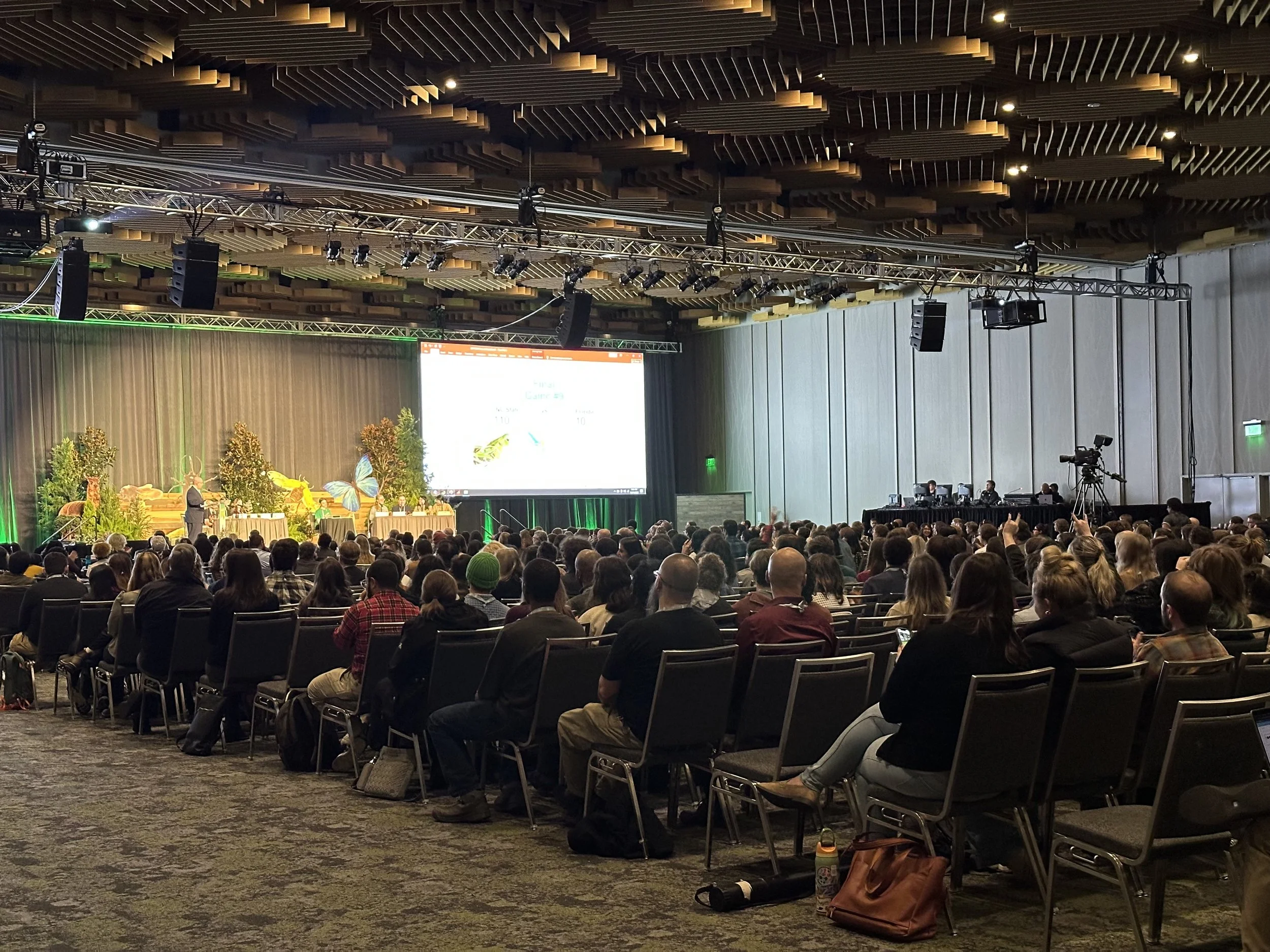
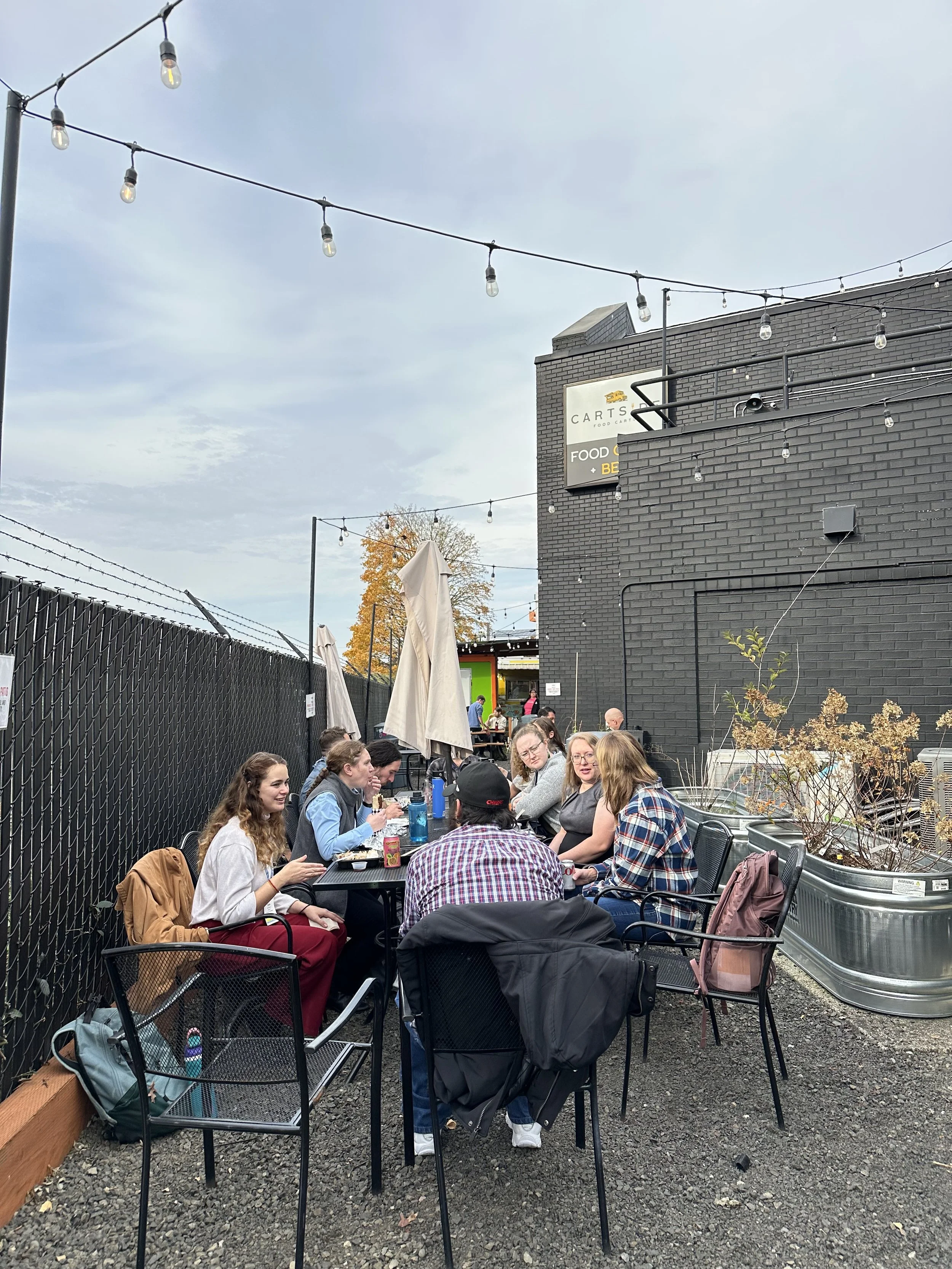
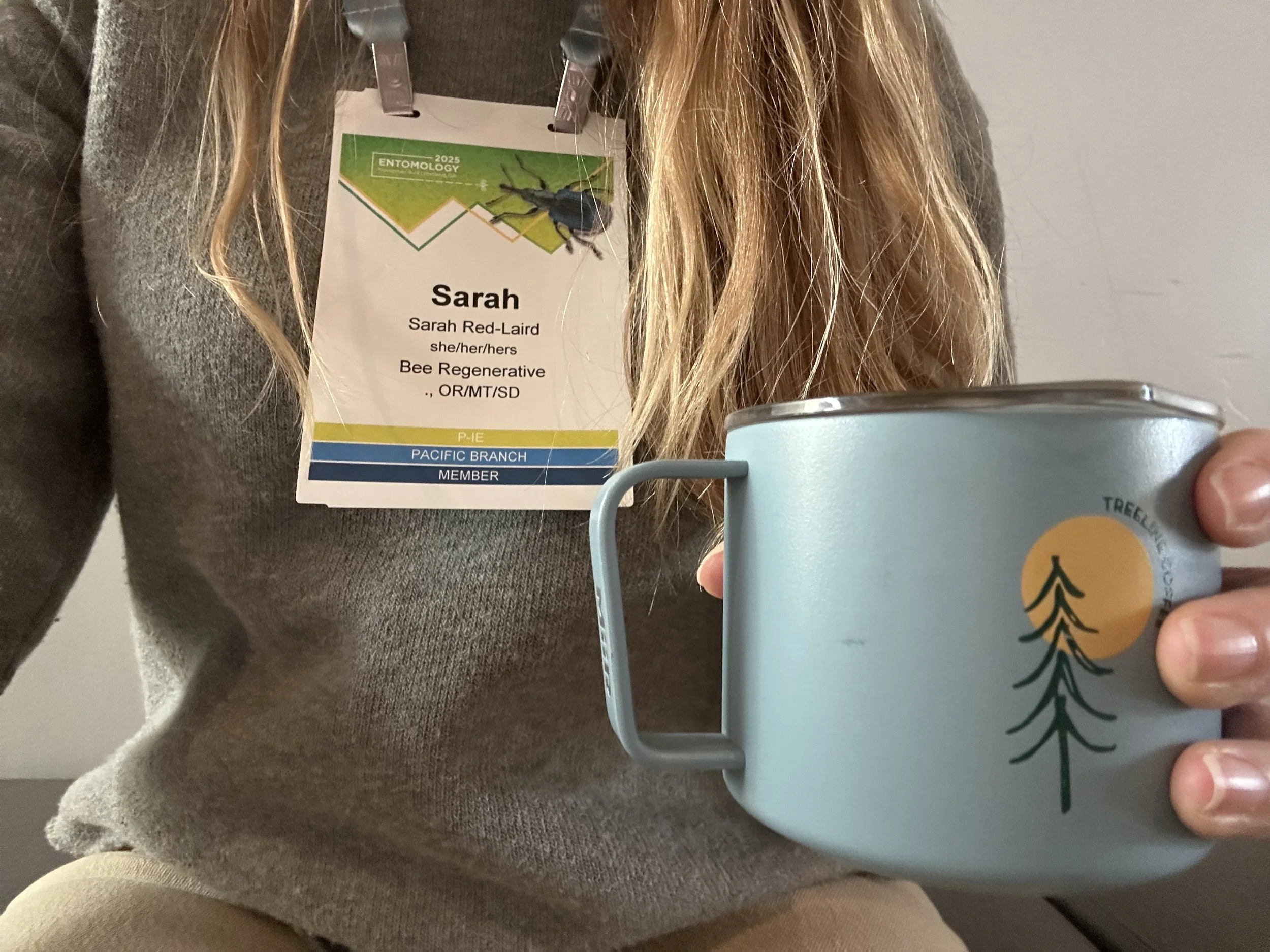
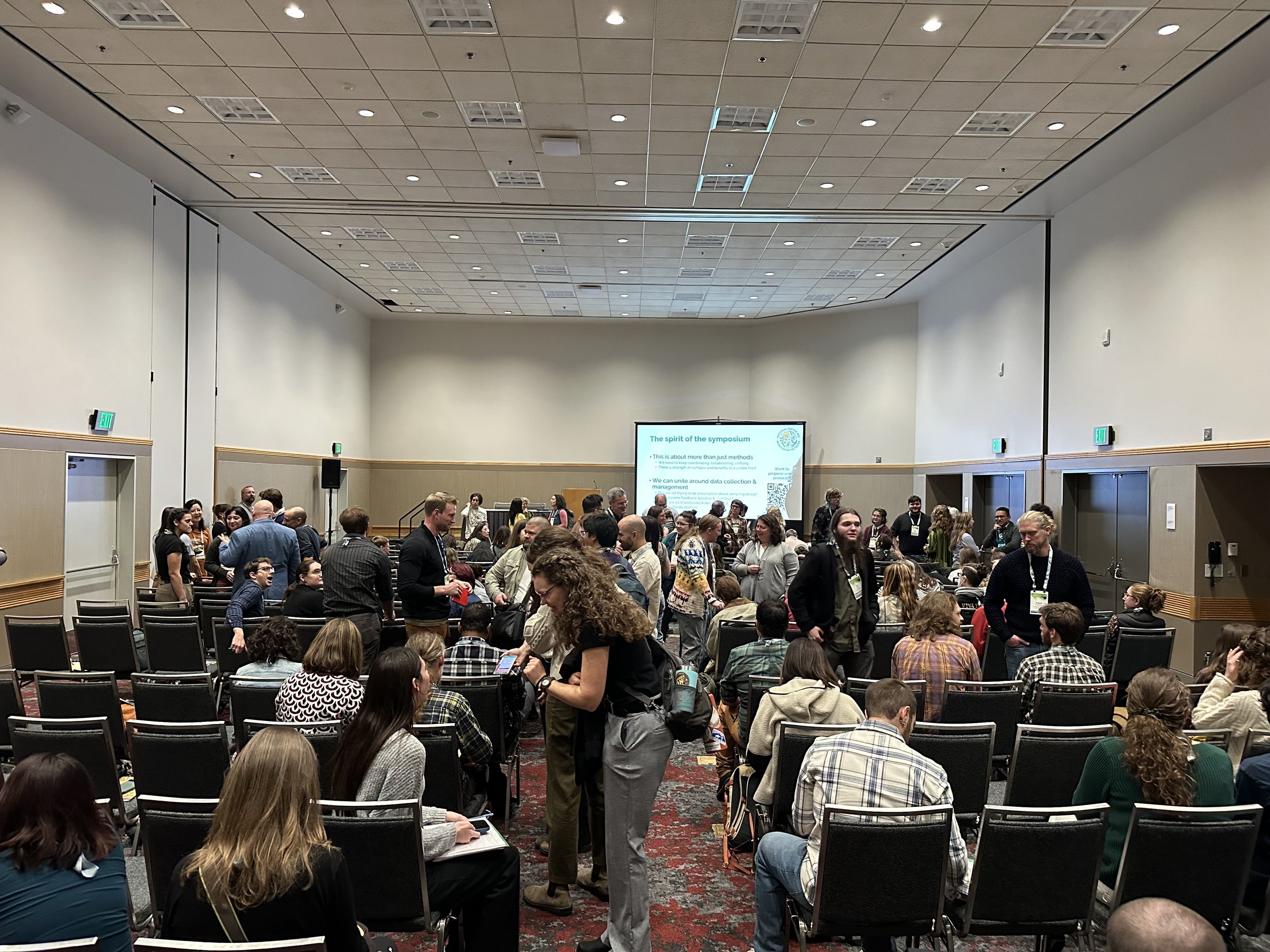
I just got back from the Entomological Society of America's annual meeting in Portland, and friends, I need to tell you about it. Because when I tell people I went to an entomology conference, they picture stuffy academics in beige blazers presenting PowerPoints in fluorescent-lit hotel ballrooms.
They are SO WRONG.
Here are my top 10 favorite things from a week spent with the coolest, kindest, most fashion-forward bug nerds on the planet:
1. The FASHION 🐛✨
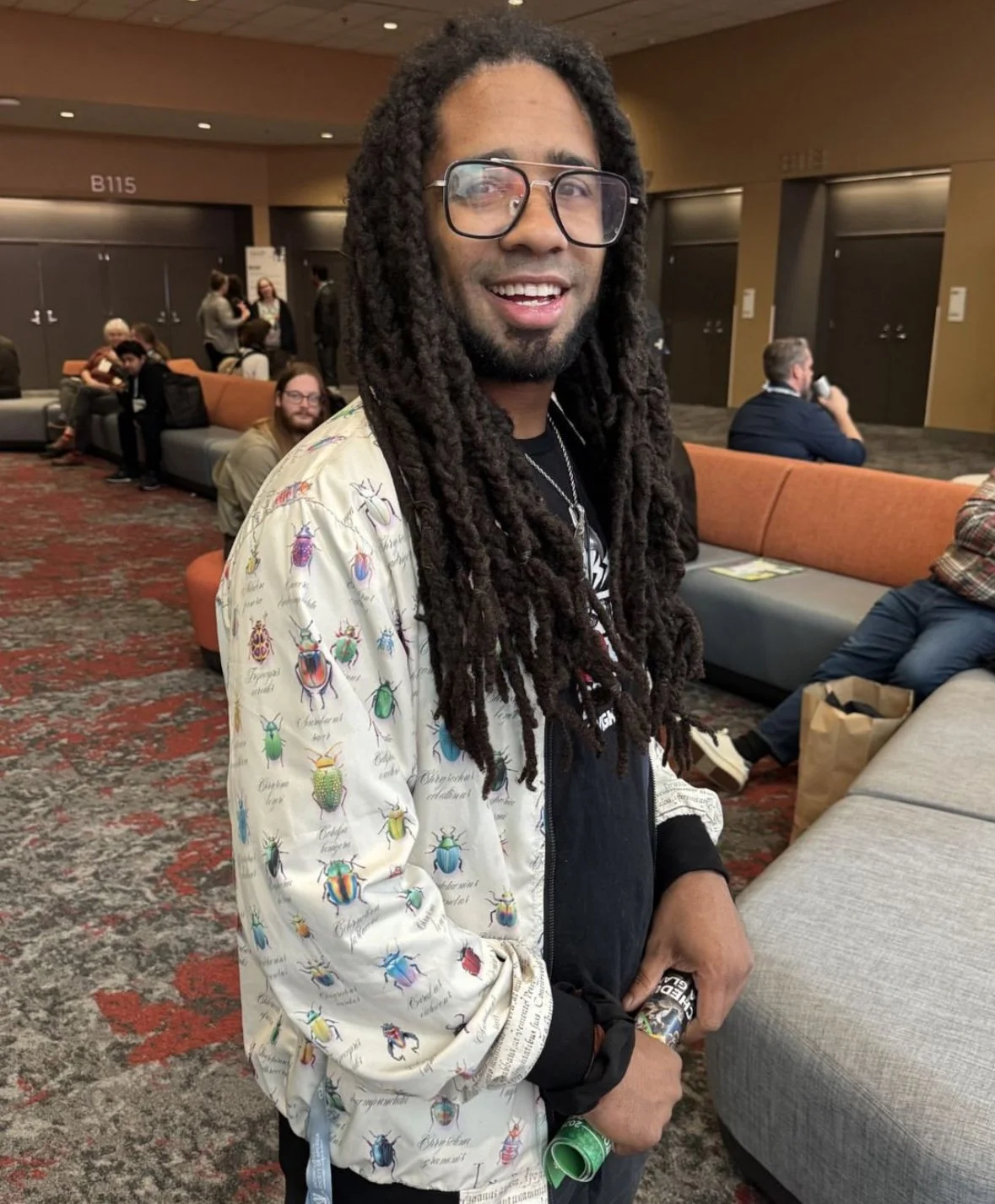
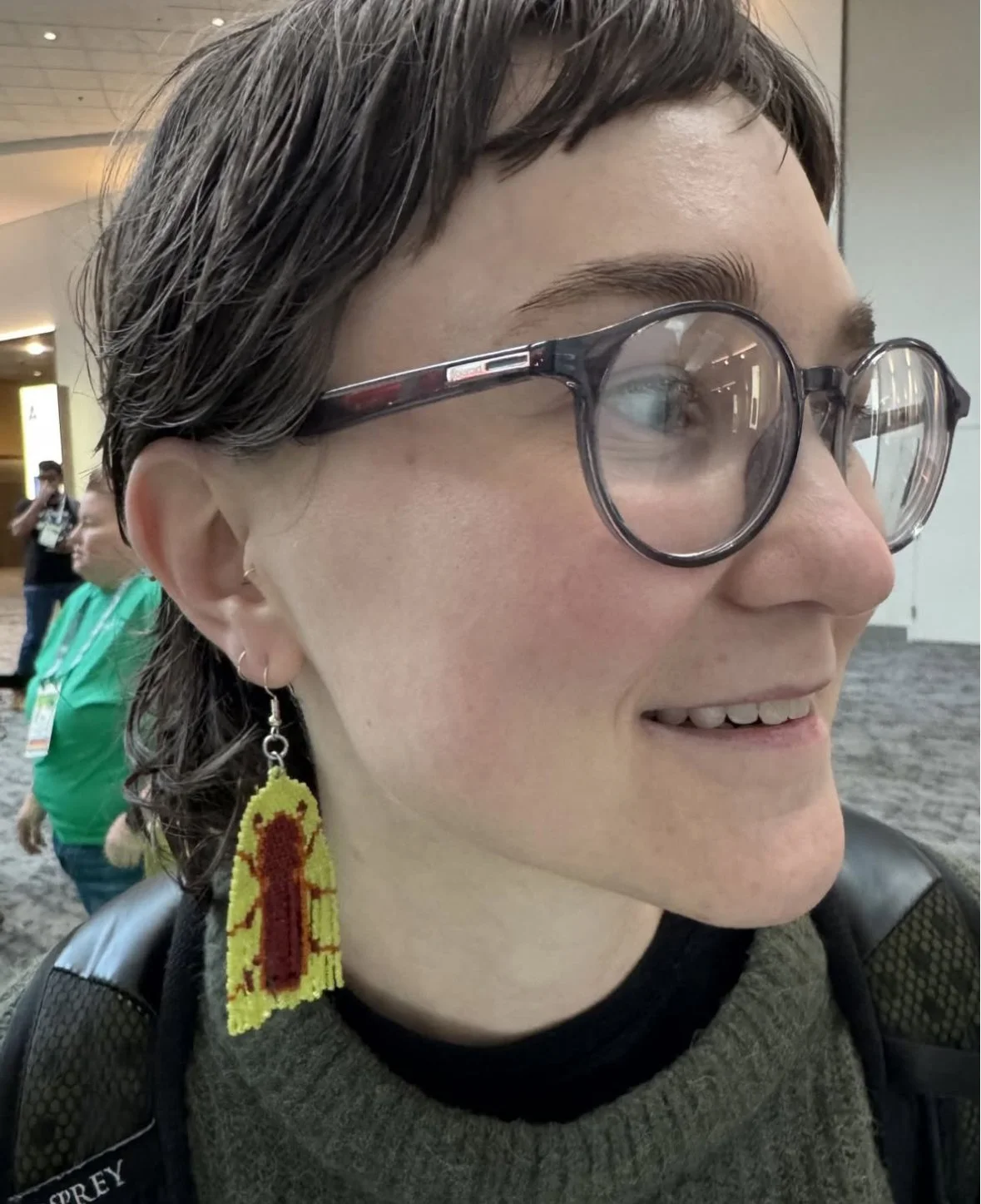
Listen. I thought I was going to a science conference. What I actually attended was apparently New York Fashion Week: Insect Edition.
Repeating beetle patterns on button-up shirts. Skirts COVERED in marching ants. Blouses featuring entire bee colonies. Earrings shaped like katydids. Socks with anatomically correct insect illustrations. One person wore pants with a giant praying mantis printed across both legs.
It was high fashion. It was bold. It was unapologetic.
I have never felt so under-dressed in my life, and I loved every second of it. Note to self: step up the bug-patterned wardrobe game for next year.
2. The DRAG SHOW (That I Tragically Missed) 🦋🎭
Okay, so apparently there was a drag show where entomologists dressed as the insects they study.
IT SOLD OUT IMMEDIATELY.
I did not get tickets.
From what I heard, it was completely unhinged, absolutely spectacular, and exactly what you'd hope for when scientists who spend their lives studying bugs get to perform as those bugs.
There were allegedly moth queens. Beetle divas. A very committed molting crane fly performance.
Next year, I'm camping out for tickets. This is not a drill. If you're reading this and you were there, please send photos. I need to live vicariously.
3. How Ridiculously KIND Everyone Was 💛
Here's the thing nobody tells you about academia: it has a reputation for being cutthroat, competitive, and full of people guarding their research like dragons hoarding gold.
The entomology community did not get that memo.
Everyone I met was warm, supportive, genuinely excited to hear about each other's work, and eager to help. People swapped contacts, offered to share data, introduced me to collaborators, and celebrated each other's successes.
It felt like... community. Like we were all in this together—figuring out how to save pollinators, understand ecosystems, and make the world a little better, one bee at a time.
Growing up, I had a very different impression of what academia would be like. Being a field biologist working outside traditional academic structures, I wasn't sure I'd be welcomed. But everyone—from grad students to tenured professors—made me feel like I belonged.
And honestly? That means everything.
4. The Undergraduate Students Who Thought I Was Cool 🤓
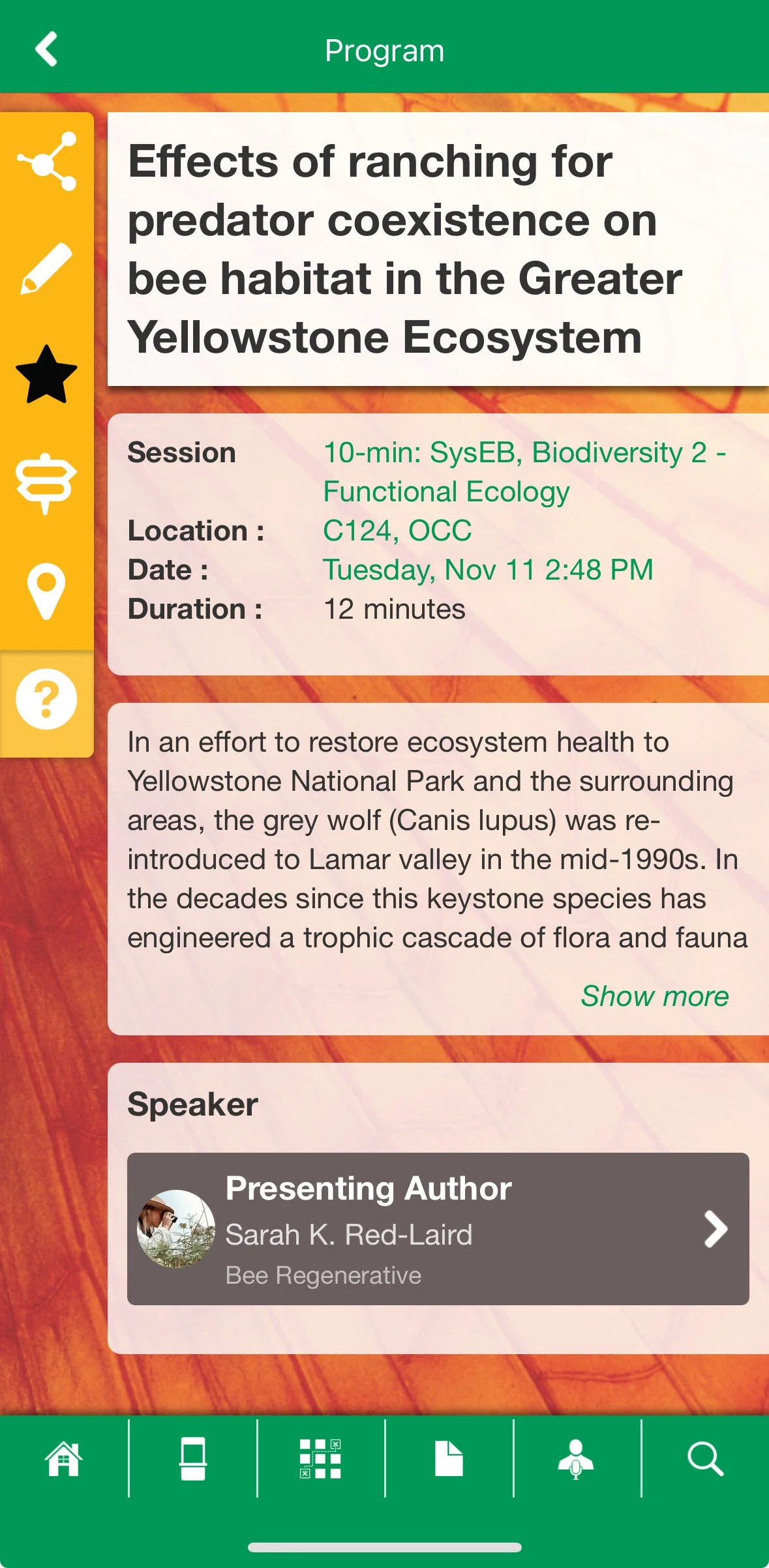
I gave a talk on our Bison & Bee Habitat Project (more on that response in a minute), and afterwards, my friend Rachel—who now runs her own lab—came up to say hi. She had a little squad of undergraduate students with her.
One of them looked at her, eyes wide, and whispered: "Oh my god. You KNOW her?"
Reader, I blushed.
It was such a gift to talk with those students and show them that you can be a scientist, study insects, do field research, and make an impact without following the traditional academic path. You don't need a tenure-track position to contribute to science. You don't need a PhD to matter in this field.
(Though if you want those things, go for it! No shade to academia—just saying there are multiple roads to the same destination.)
Seeing those students' faces light up when they realized there were different ways to build a career in entomology? That's the stuff that fuels me for months.
5. The Collaboration Conversations 🤝
I had SO many conversations with other entomologists studying pollinators in grassland ecosystems, bees on grazed lands, and the intersection of livestock and native insects.
And the vibe wasn't "I'm going to protect my research ideas." It was "OH MY GOD, you're working on this too?! How can we help each other?"
People wanted to share data. Compare methodologies. Talk about co-authoring papers. Brainstorm grant applications together.
The collaborative energy was chef's kiss.
If you're a rancher reading this and wondering whether scientists actually care about making their research practical and applicable to working lands—YES. Yes, they do. And they're hungry for partnerships with people like you.
6. Seeing Old Friends Who Are Still Bee Obsessed 🐝
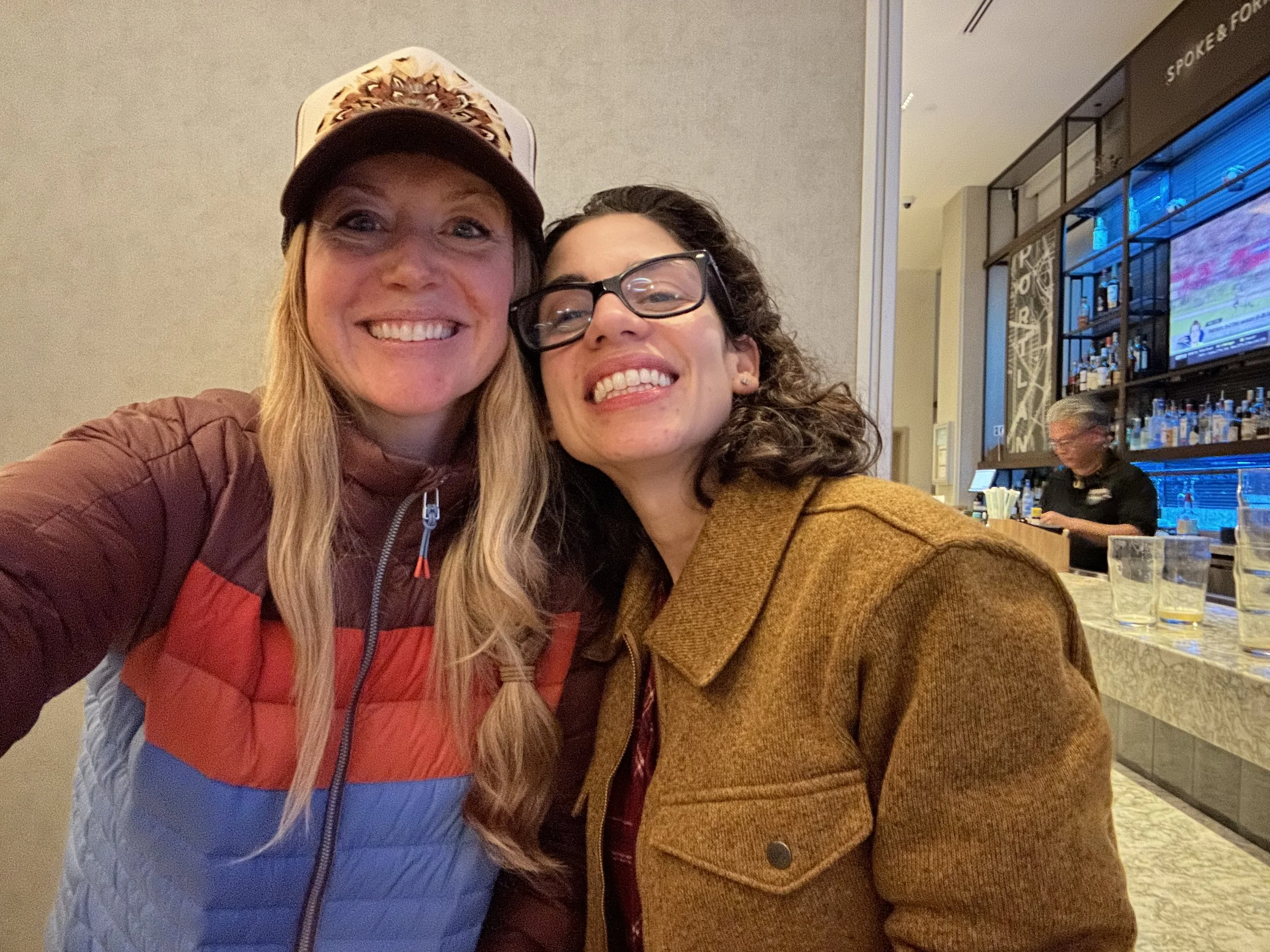
I got to catch up with friends I've known for over a decade—people I met back when we were all just getting started in beekeeping and honeybee research.
And here's what's wild: Most of us have morphed our careers to focus not just on honeybees, but on native bees too. We've all expanded our scope, deepened our questions, and stayed committed to this work.
There's something beautiful about growing alongside people—watching each other's careers evolve, celebrating milestones, commiserating over funding challenges, and still getting genuinely giddy talking about bees after all these years.
These friendships are one of the greatest gifts of this work.
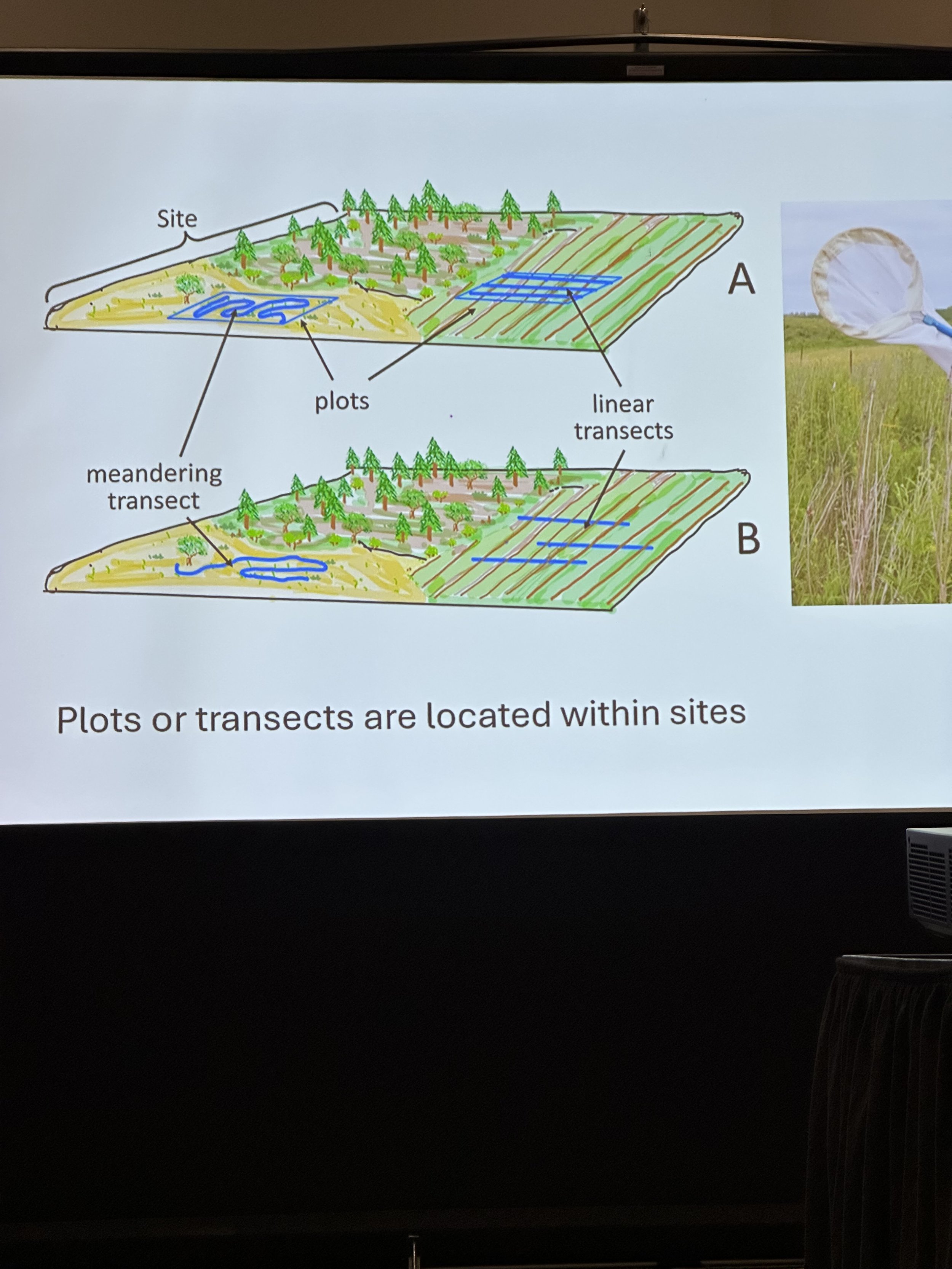
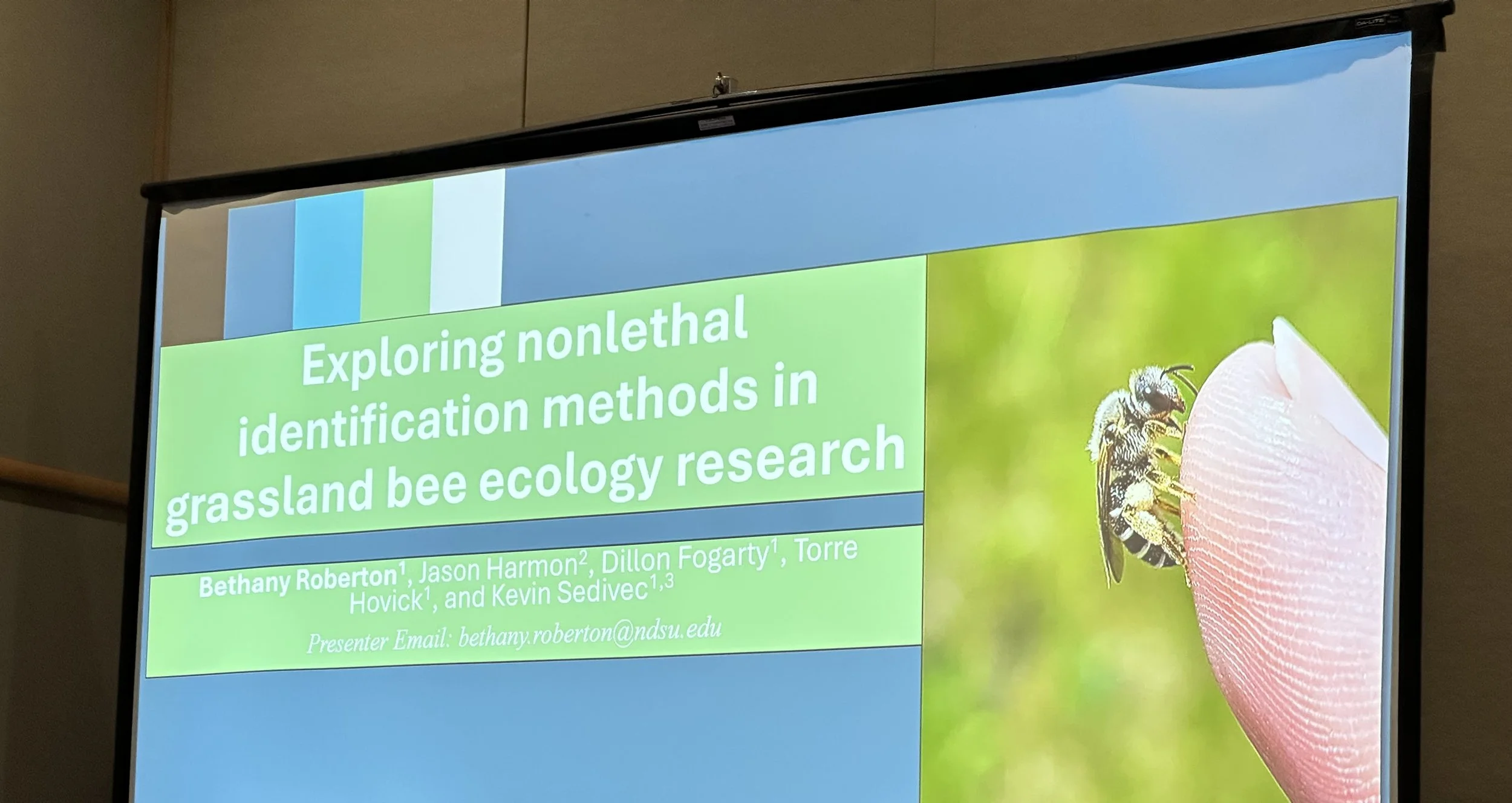
7. The Fascinating (and Complicated) World of Nonlethal Bee Sampling 🔬
Okay, this one's a little nerdy, but stick with me.
There's growing interest in studying bees without killing them. Which sounds great in theory! Who doesn't want a catch-and-release model for bee research?
But it turns out it's really, really complicated.
Some researchers are experimenting with:
eDNA (collecting genetic material from flowers or nests)
Catch-and-release with photo ID (take detailed photos, then let them go)
Clipping tiny bits (a toe, piece of antenna, wing edge) for DNA analysis
But here's the problem:
DNA databases for bees are incomplete, so you can't always ID species from genetic material alone
If you trap and release a bee, she might get disoriented and not make it back to her nest
If you clip part of a bee, it might suffer or die anyway
We don't have standardized protocols yet, so comparing data across studies is hard
The jury is still out. But I'm glad we're having these conversations, thinking critically about ethics, and working toward more humane methods.
Science is a process. We're figuring it out together.
8. The Complete Lack of Gatekeeping 🚪❌
I didn't encounter a single glass ceiling.
Not one person made me feel like I didn't belong because I'm not affiliated with a university. Not one person dismissed my work because it's happening on working ranches instead of research stations.
Instead, I got:
USDA scientists offering to collaborate
Academics excited to cite our findings
Graduate students asking about our methods, especially the social science aspect of our work
Professors inviting me to guest lecture or asking if their students could meet me in the field
The vibe was: "We're all trying to understand bees and ecosystems. Let's share what we know and make each other's work better."
That openness? That generosity? That makes my little nerd heart SO HAPPY.
9. Validation That This Work MATTERS ✅
Here's a secret fear I carry: What if I'm just doing this work because I love it, but it doesn't actually matter to anyone else?
What if I'm chasing bees across the West, living in a campervan, spending 11,590 miles a year on dirt roads... just because it's my dream, not because the world actually needs it?
But being at this conference—hearing other researchers reference similar questions, getting feedback from scientists whose work I admire, seeing presentations that align with what we're discovering—I realized:
This work is needed.
The questions Bee Regenerative is answering matter to the scientific community. They matter to agriculture. They matter to policymakers. They matter to anyone who cares about food security, functioning ecosystems, and thriving landscapes.
What we're learning about bison and bees, grazing management and pollinator diversity, working lands as refugia—it's not just my passion project. It's contributing to a body of knowledge that will shape conservation and agriculture for decades.
That reassurance? I needed it more than I realized.
10. Gratitude for Our Ranching Partners 🤠
I had several conversations with other entomologists who are trying—really trying—to build relationships with ranchers and farmers for research partnerships.
And it's HARD.
Getting access to land, building trust, navigating different vocabularies and priorities, finding common ground between conservation science and agricultural economics—it takes years.
Which made me realize (again) how incredibly lucky we are.
Our partners—the Anderson family ranches, North Bridger Bison, Dakota Partnership Ranch, American Prairie, our vineyard collaborators—they don't just tolerate our research. They're genuinely invested. They ask questions. They adjust management based on what we're learning. They invite us into their operations and their lives.
That kind of partnership is rare. It's precious. And it's the reason we can do this work at all.
So if you're one of our ranching or vineyard partners reading this: Thank you. You make the science possible. You make the impact real. And you remind me every day that conservation doesn't happen in a vacuum—it happens in relationship.
The Takeaway
The Entomological Society of America meeting reminded me why I love this work.
It's not just about the bees (though they're pretty great). It's about the people—the curious, kind, fashion-forward, drag-show-attending, collaboration-loving, gatekeeping-hating community of humans who have dedicated their lives to understanding the smallest creatures on the planet.
And somehow, miraculously, I get to be part of that community.
See you next year, bug nerds. I'll be the one in head-to-toe bee patterns, holding tickets to the drag show. 🐝✨
P.S. If you were at ESA and we crossed paths—thank you for the conversations, the encouragement, and the inspiration. If we didn't get to connect, find me next year. I'll be easy to spot: I'll finally have upgraded my insect fashion game.
P.P.S. Seriously, if anyone has photos from the drag show, my DMs are open. I need to see this.