
Bee Habitat in Cyanotype : Greeting Card Collection
Each cyanotype card has a companion webpage; click on a print to learn the story behind the art.
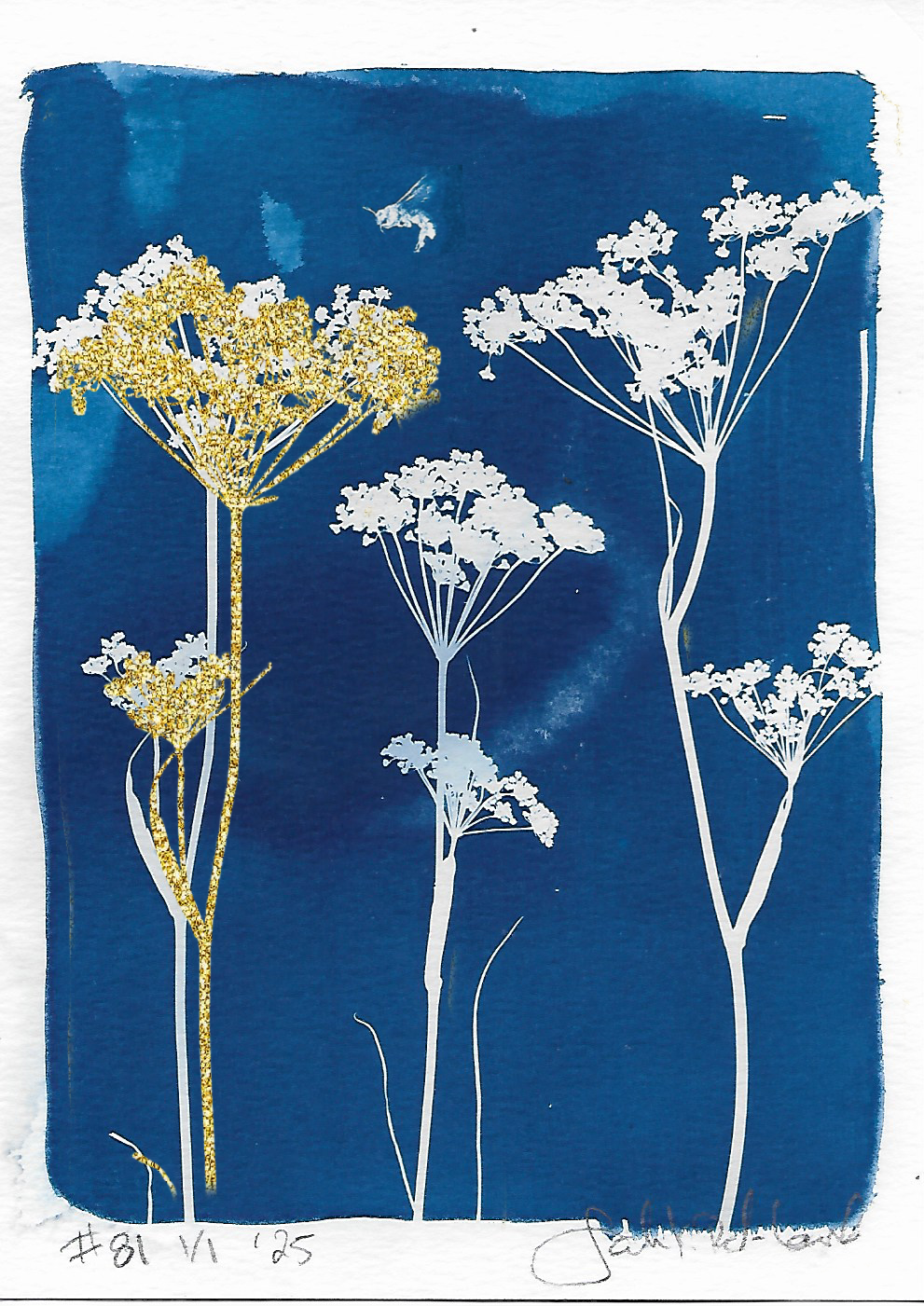
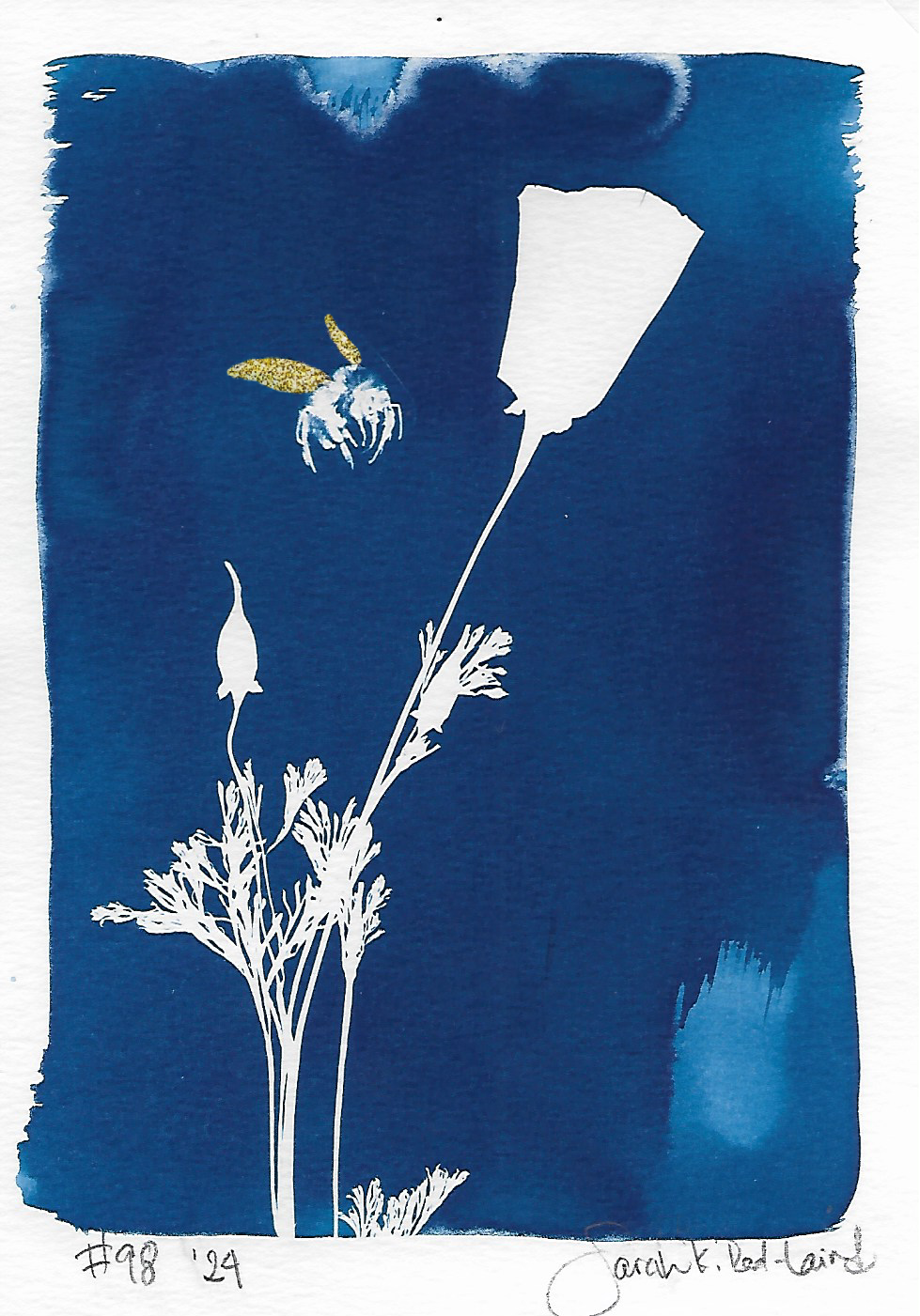
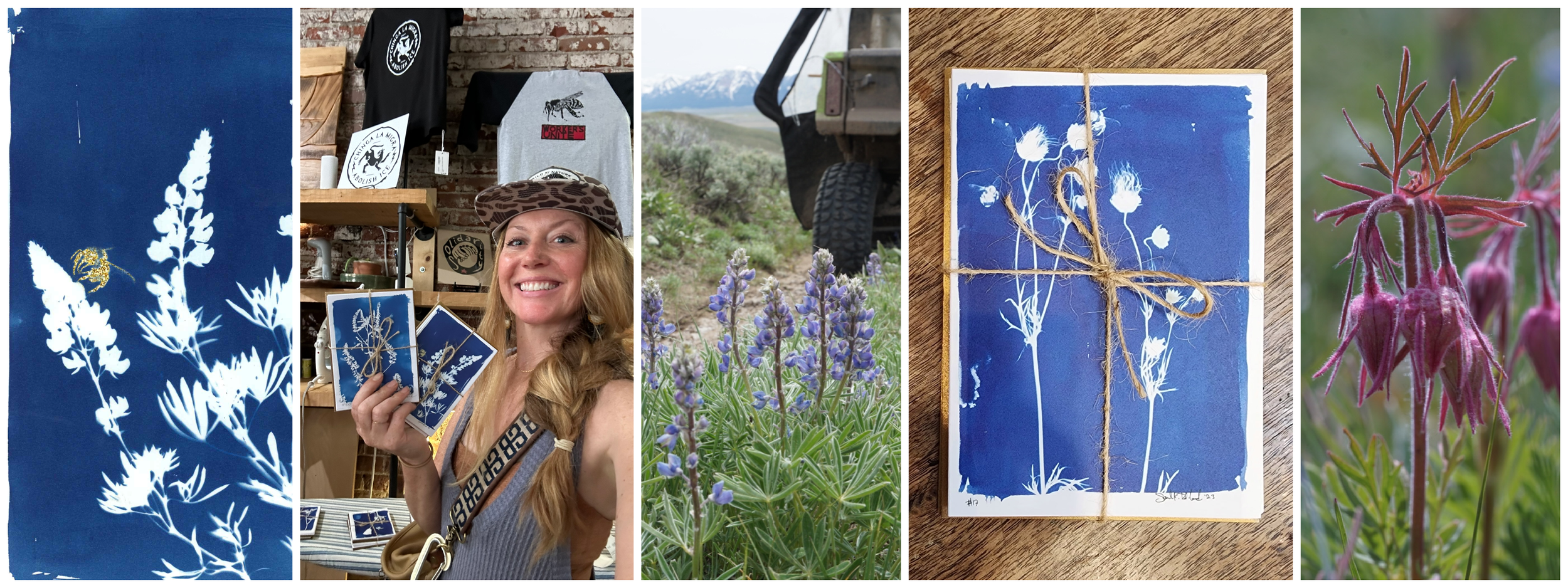
Every card in this set began as a flower pressed by hand, in the field, in the middle of an active bee research season. Artist and melittologist Sarah Red-Laird splits her year between a Southern Oregon art studio and a campervan/bee lab on the western range — studying bees, bison, cattle, vineyards, and the plants and soils that connect them. Bee Habitat in Cyanotype is her ongoing visual record of that work.
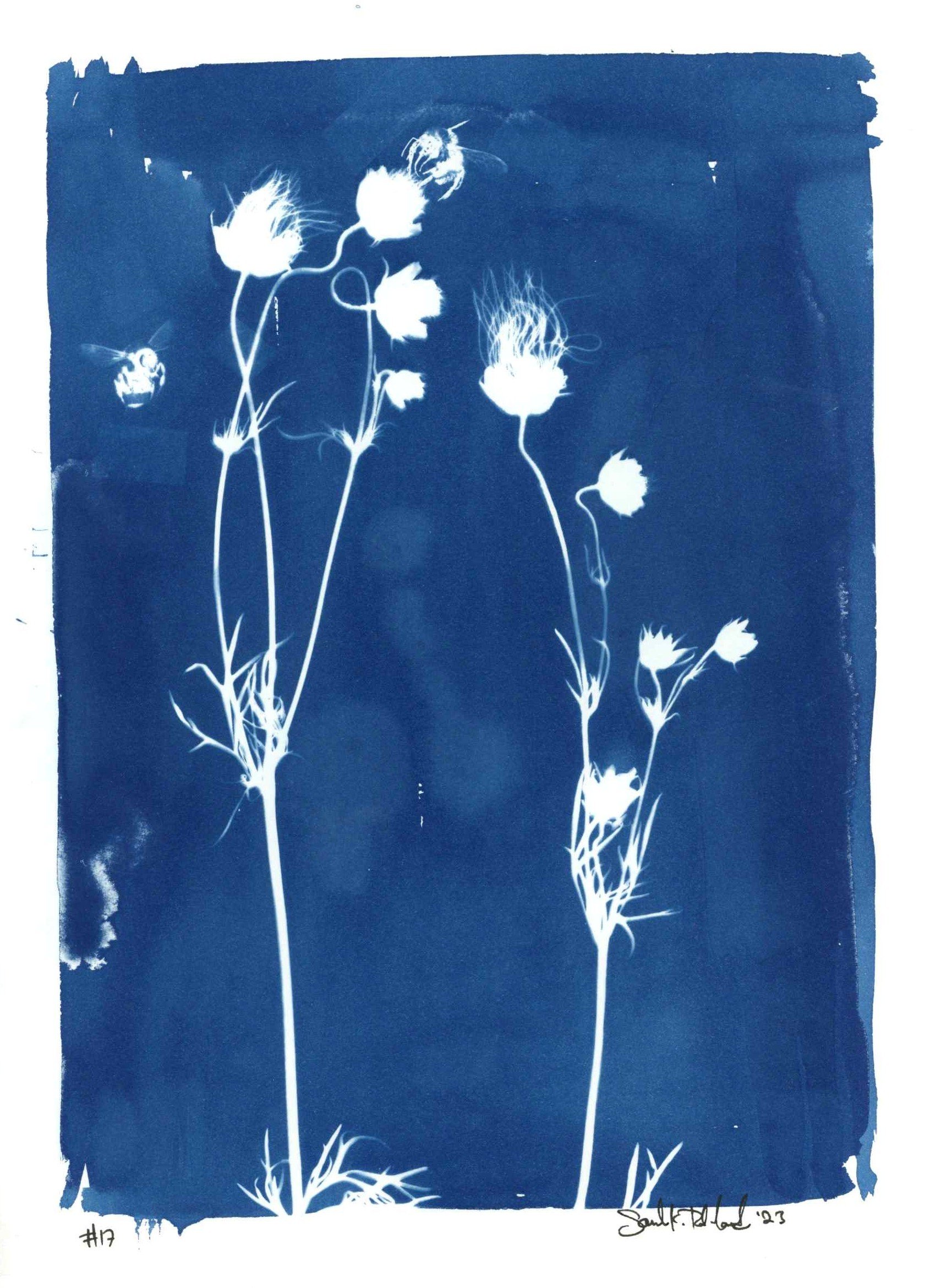
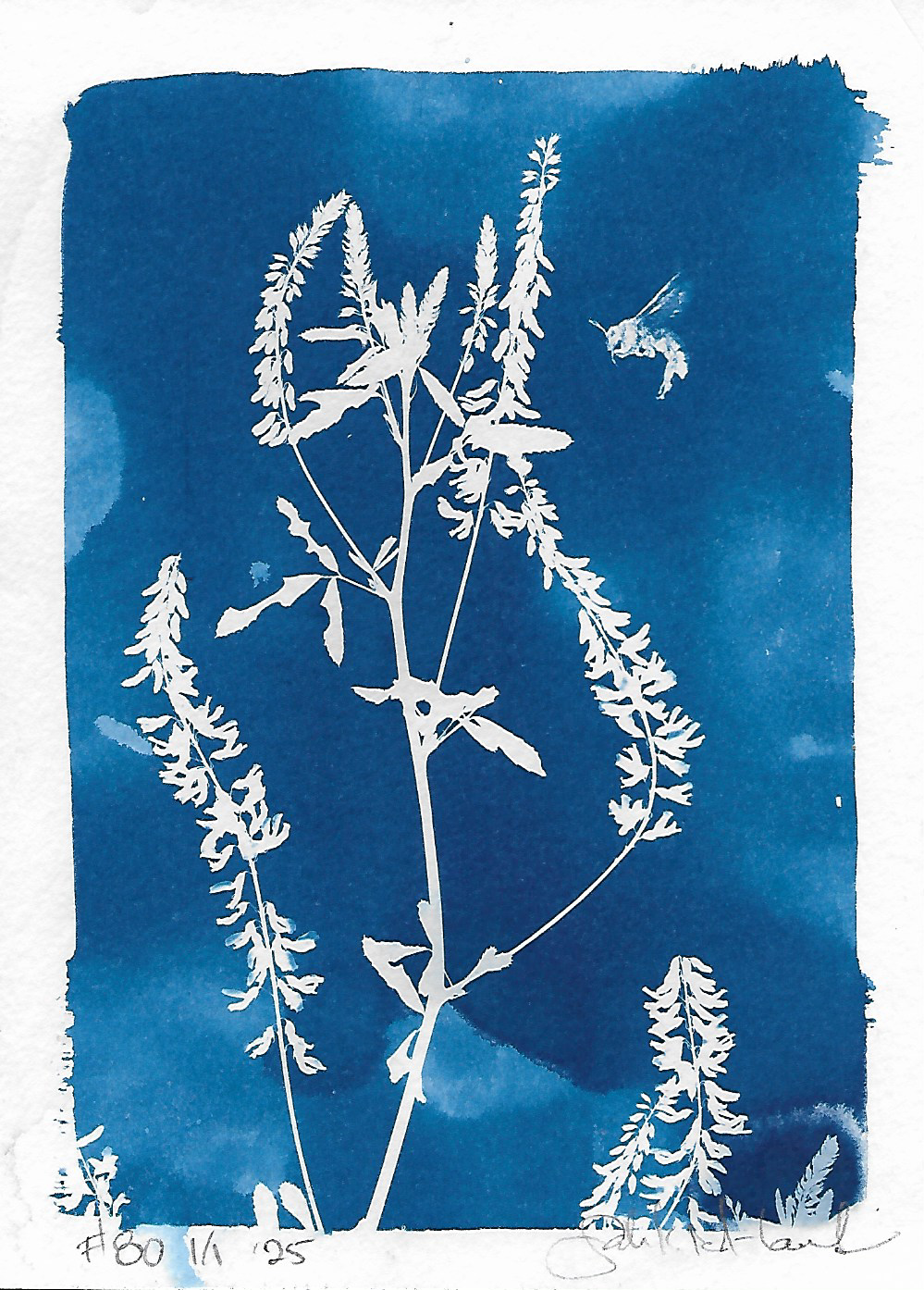
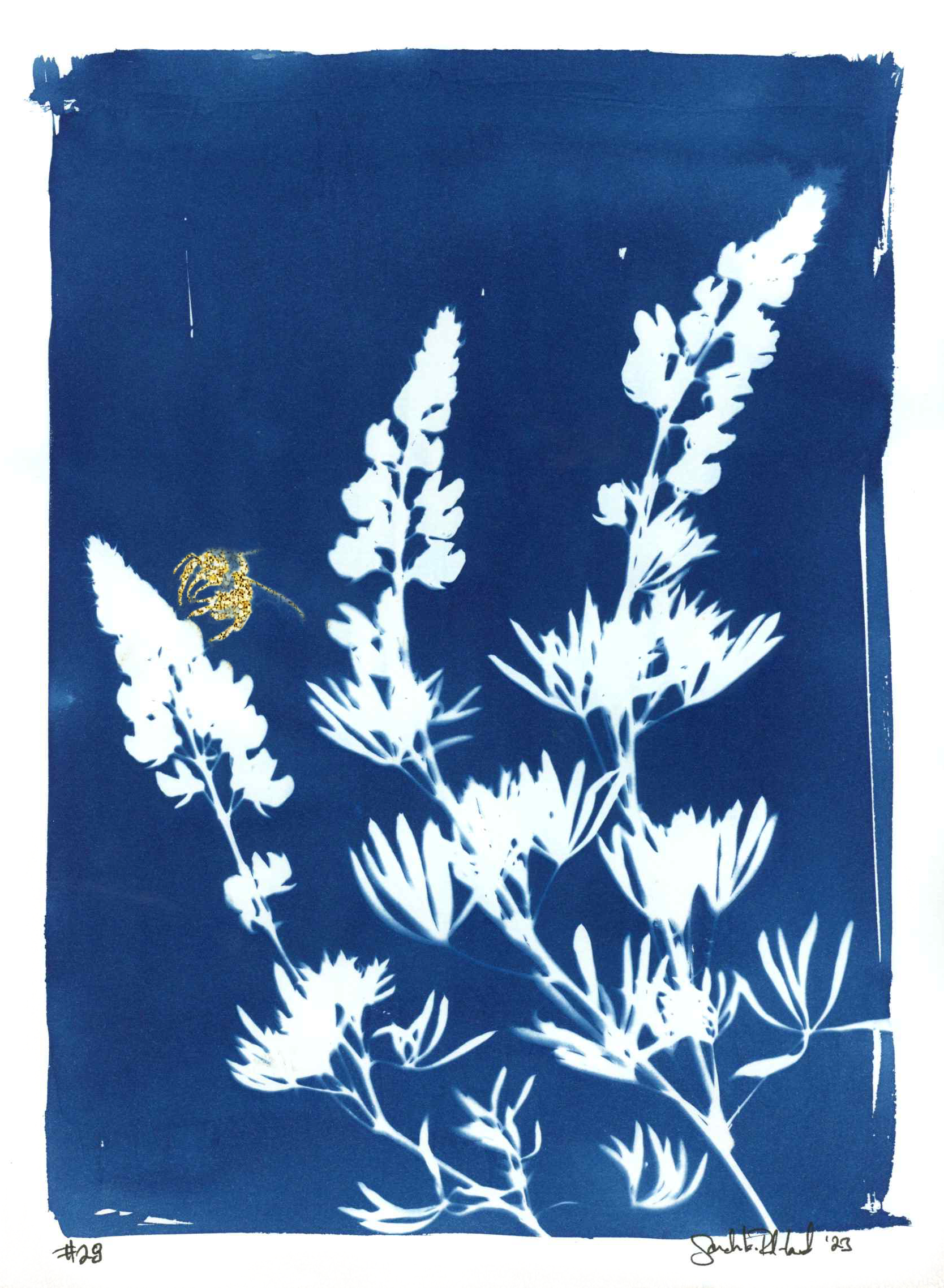
Each card pairs a pressed flower and a real bee from a real Bee Regenerative project site. A honey bee on a sickle alfalfa blossom from a 27,000-acre bison ranch in South Dakota. A bumble bee on prairie smoke on a Montana mountaintop. A silvery lupine on a hillside named for it. A wild carrot from a Willamette Valley vineyard. A California poppy on a south-facing edge held in place by the kind of farming most vineyards do not yet practice.
The cyanotype process uses iron salts and direct sunlight — invented in 1842, popularized by the botanist Anna Atkins, made of nothing but a flower and the sun. Each card opens to an info slip tucked inside with directions pointing toward a companion webpage that tells the full story of the place, the bees, and the science. 100% of proceeds support the work behind every print.